
 Land and unauthorised occupation
Recovering occupied or obstructed land
Assessment and managed attendance where people, vehicles, tents, animals or temporary structures are present without authority.
Specialist operational support for councils dealing with unauthorised occupation, temporary housing, commercial property, land recovery and sensitive possession matters across England and Wales.
Individual cases, urgent instructions, specialist work and overflow support—without requiring the council to replace its principal enforcement provider.
Council instructions are rarely judged only by whether land or premises were recovered. Officers may also need to show that the authority used the right route, considered risk and vulnerability, controlled its contractor and retained a proper record.
UK Bailiffs combines practical attendance with the planning and reporting needed around sensitive land, housing and commercial-property matters.

Four connected service groups give council teams a clear starting point. We then identify the specific route, personnel and supporting resources required.
Land and unauthorised occupation
Assessment and managed attendance where people, vehicles, tents, animals or temporary structures are present without authority.
 Housing and occupier matters
Structured attendance for suitable cases after the agreement, legal status, housing duty, notice and authority have been reviewed.
 Commercial property and recovery
Commercial rent recovery, lease enforcement and coordinated site control for qualifying council-owned or managed premises.
 Notices, vehicles and site control
Practical services that sit around possession, enforcement and land recovery rather than leaving the council to coordinate several providers.
We can support the authority where its existing contract does not cover the work, where specialist experience is required, or where timing, sensitivity or capacity makes a second provider useful.
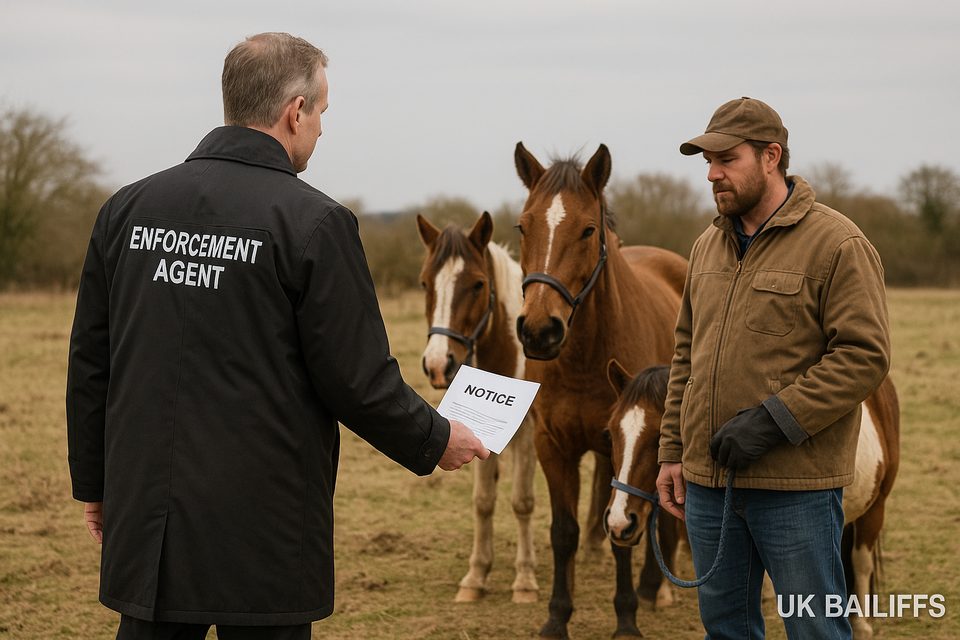
An enquiry does not start enforcement. Authority, documents, the apparent legal route and operational circumstances are reviewed before an instruction is accepted.
Tell us the location, background, required outcome and deadline. Send only documents and site information already held.
We review who may instruct, the apparent remedy, access, occupation, notices and any legal or factual uncertainty.
Personnel, risk controls, welfare considerations, supporting services, timing and cost are agreed.
The team undertakes the accepted work and records the relevant attendance, decisions, evidence, outcome and next steps.
The operational package is agreed for the instruction, giving the responsible officer a clear view of what was planned, what happened and what follows.
Authority and document review, operational risk assessment, resource selection and identified safeguards.
Clear team leadership, proportionate engagement, active review and coordination with other parties where agreed.
Attendance record, documents served, material decisions, safely obtained photographs and the reported result.
We will identify anything further needed during review. Officers, contractors and members of the public should not approach an occupied site or take new photographs where doing so could create risk.
Public-sector instructions can attract complaints, scrutiny and urgent internal questions. Our approach is built around clear authority, suitable personnel and records that explain the attendance.
We will identify the information needed, assess the apparent service and explain the proposed next step. An enquiry is not accepted as an instruction until authority, scope and costs have been confirmed.
Local-authority first instruction: quote LA723 for 15% off the first invoice.
General service information only; not legal advice. Every instruction is subject to review of authority, lawful basis, documents, risks, suitability and availability. UK Bailiffs may refuse, pause or refer a matter for legal clarification.